Linen Canvas vs Cotton Canvas: Which to Use?
As young artists, we are faced with lots of choices even before we start that first brush stroke. We think about the theme of our painting, what medium should we use, the size of the canvas to use, where to get inspiration, or which canvas would be perfect for our art. It could be overwhelming, especially for newbies out there who have just started in the art of painting.
There are debates on which canvas is better: linen or cotton. Here we lay down the benefits and drawbacks of using a linen or cotton canvas.
Linen
Pros
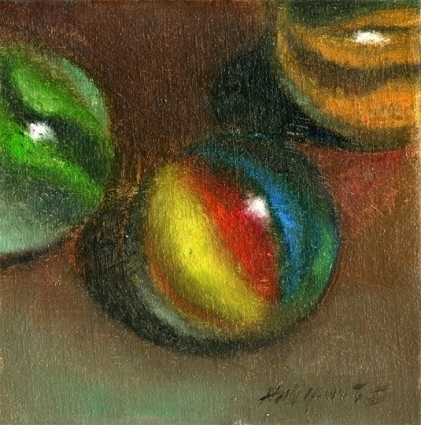
Linen is a canvas made from flax fibers. The word is derived from the Latin word “linum” which means the flax plant. Professional oil artists prefer linen canvas for its longevity and high quality. Linen is very receptive to sizing and priming applications. Sizing is a glue barrier which prevents the ground and the paint from coming in contact with the linen fibers, making it a more durable choice of canvas. A linen canvas preserves its natural oils and easily adapts to moisture changes which gives the fiber’s flexibility and helps prevent cracking over time. The linen fiber has a more natural weaved finish and is available in different textures, weights, and smooth or rough finish.
Cons
Linen canvas may be a better quality canvas and resistant to wear and tear but it is not that widely used because of its price. It is more expensive than cotton, jute, or other fibers used as canvas because producing linen is quite labor-intensive. If you’re just a student, the high price tag may turn you off. Also, you may have difficulties in priming and stretching a linen canvas but it provides the smoothest and stiffest painting surface, perfect for oil paintings. Students should avoid using a linen canvas unless their painting skills and quality of work are outstanding and are comparable to well-known artists.
Cotton
Pros
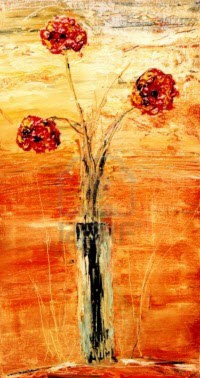
Cotton is a soft fiber from a cotton plant native to the Americas, Africa, and India. More artists choose cotton canvas because its cheaper. Since cotton is more available and has low manufacturing costs, the price of a cotton canvas is more affordable than linen. It is more flexible and easier to stretch properly, making it a popular choice among art students. It is good to know that a properly prepared cotton canvas can be as durable as a linen canvas. So, if you want to use a lasting canvas without hurting your wallets, consider a cotton canvas.
Cons
Cotton is known for its flexibility and its ability to stretch easily, but it is not advisable to use it in very large paintings since it is prone to sagging.
Before you choose a canvas, consider the medium you are using and what you want to achieve on the canvas surface. For students or hobbyists, a cotton canvas is recommended because of its practicality and affordable price.

 Horizon lines also come in handy when explaining abstract artwork to clients and individuals the love you but may not necessarily understand your art! I’ve found that by helping those individuals that are unaccustomed to viewing some of my own abstract artistry to focus on the eye-level starting point of my work, they’ve developed a firmer grasp on what I’ve been painting all of these years.
 Many of us enjoy


 CanvasLot.com strives to provide all artists and individuals who use
  Another point of interest to you should be the good company that CanvasLot.com is keeping with renowned Fredrix.
  Attention all canvas artists who need a online promotional overhaul!
 I also recommend using Pinterest as a source of advertisement and promotion since you can develop an interactive fan base that can re-pin your artwork onto their social networking space. It creates double exposure for your business!
 RAW Artists
 deviantART
 Blue Canvas


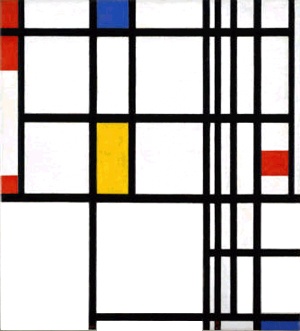
 Outside of the art world, De Stijl on canvas has influenced brilliant minds. Frank Lloyd Wright, the world’s premiere architect with a personal history full of intrigue, uses the most recognizable form of De Stijl in the erection of commercial and residential buildings.
 Of all Wright’s creations, the most famous and revered is located east of downtown Pittsburgh, Pennsylvania called Fallingwater. I think of it as a residential structure that was influenced by De Stijl because of its sharp lines and neutral color scheme. This building was erected in the mountains over a 30′ waterfall. De Stijl is a movement that heralds nature. In my humble opinion the Fallingwater home encompasses many of the ideals that De Stijl upheld, and that is why I love it so much! Take a look for yourself! I plan on packing up a suitcase and leaving Austin to visit this amazing structure one of these days. Until then, I’ll continue to study the De Stijl movement in canvas art and modern architecture.