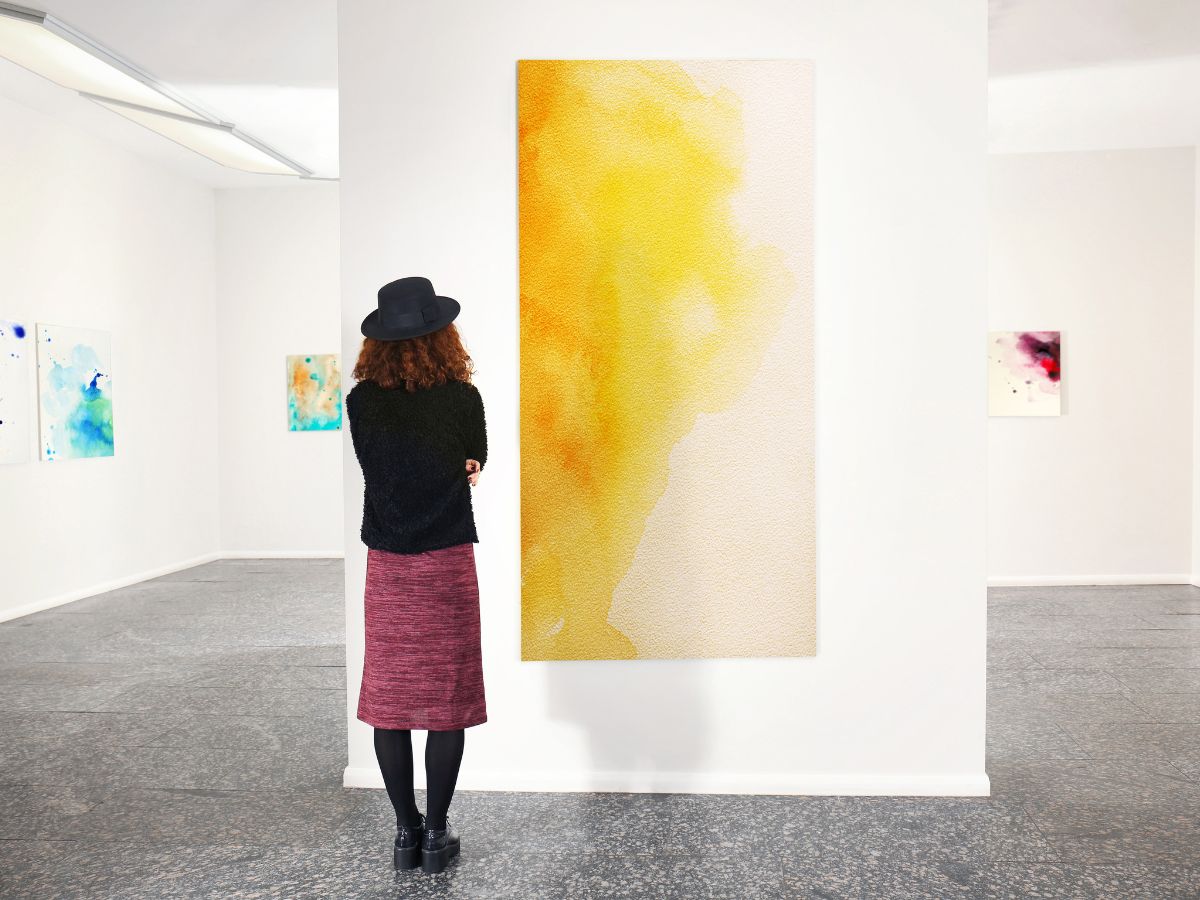
How Do Artists Get Huge Canvases for Painting?
If you’ve ever stood in front of a massive painting and thought, How did they even get that thing?, you’re asking a very normal question. Those oversized canvases don’t magically appear in studios. They’re planned, built, and handled with a lot more problem-solving than most people realize.
Here’s how artists actually do it.
Many Large Canvases Are Custom-Made
Once paintings get beyond standard sizes, artists usually stop buying pre-stretched canvases. Instead, they make them themselves or have them made to order from suppliers like CanvasLot. This gives full control over dimensions, proportions, and surface quality.
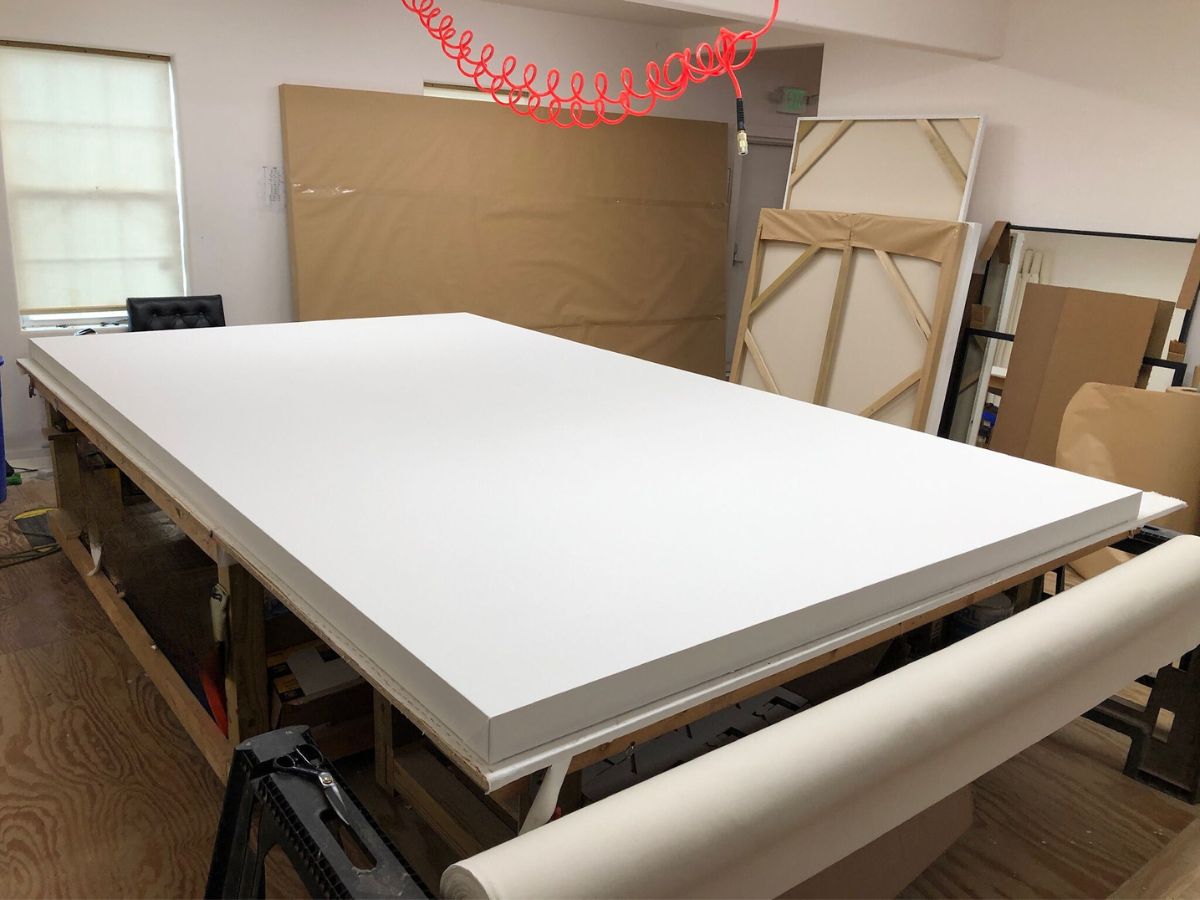
The basic process is straightforward: wooden stretcher bars are cut to size, assembled into a frame, and reinforced with crossbars to prevent warping. Raw canvas or linen is then stretched tightly across the frame and primed. It sounds simple, but at large scales, it becomes a physical job that often takes two or more people.
Some artists stretch canvas directly in their studio. Others work with professional fabricators who build frames and stretch surfaces to specification. This is especially common for exhibition-scale work.
Some Artists Paint on Canvas Rolls First
Another common approach is painting on unstretched canvas. Artists buy canvas by the roll, cut it to size, and paint it flat on the floor or tacked to a wall. Once the painting is finished, the canvas is stretched or mounted later.
This method is popular for very large works because it solves several problems at once. It’s easier to transport rolled canvas than a giant wooden frame. It also allows artists to work in spaces that couldn’t otherwise fit a fully stretched piece.
Historically and today, many large-scale painters use this approach for murals, commissions, and international exhibitions.
Studio Space Dictates Everything
The size of the canvas is often determined by the size of the studio, not ambition. Artists working large usually have high ceilings, wide doors, and clear floor space. Some paint vertically, others horizontally on the floor, walking around the work as they paint.
When space is tight, artists adapt. Canvases might be painted in sections, rotated during the process, or temporarily rolled between sessions. The final size is often a negotiation between vision and square footage.
Transport Is Part of the Planning
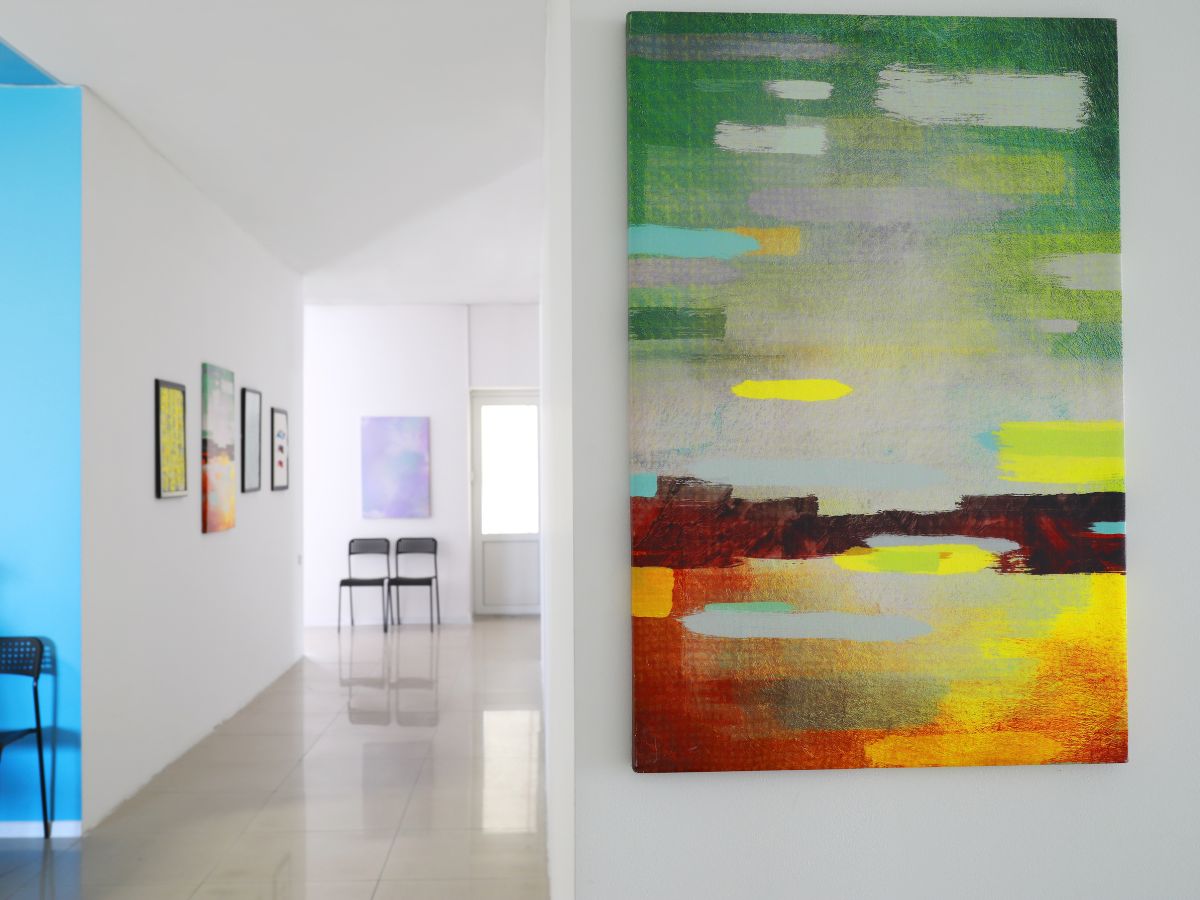
A huge canvas is useless if it can’t leave the studio. Artists think about transport early. Will it fit through the door? Into a vehicle? Up a staircase?
Finished paintings are often moved rolled, crated, or carried by professional art handlers. For very large works, the canvas may be detached from the stretcher, rolled for transport, and re-stretched at its destination.
Why Artists Work Large at All
Large canvases change how both the artist and the viewer experience the work. The body gets involved. Gestures become bigger. Marks become more physical. For viewers, scale creates immersion and presence that smaller works simply can’t replicate.
But working big isn’t about showing off. It’s about choosing the right scale for the idea. Some concepts need space to breathe.
Huge canvases aren’t about access to special materials or secret sources. They come from planning, problem-solving, and a willingness to adapt the process. Whether stretched, rolled, or built from scratch, large-scale painting is less about size and more about intention.