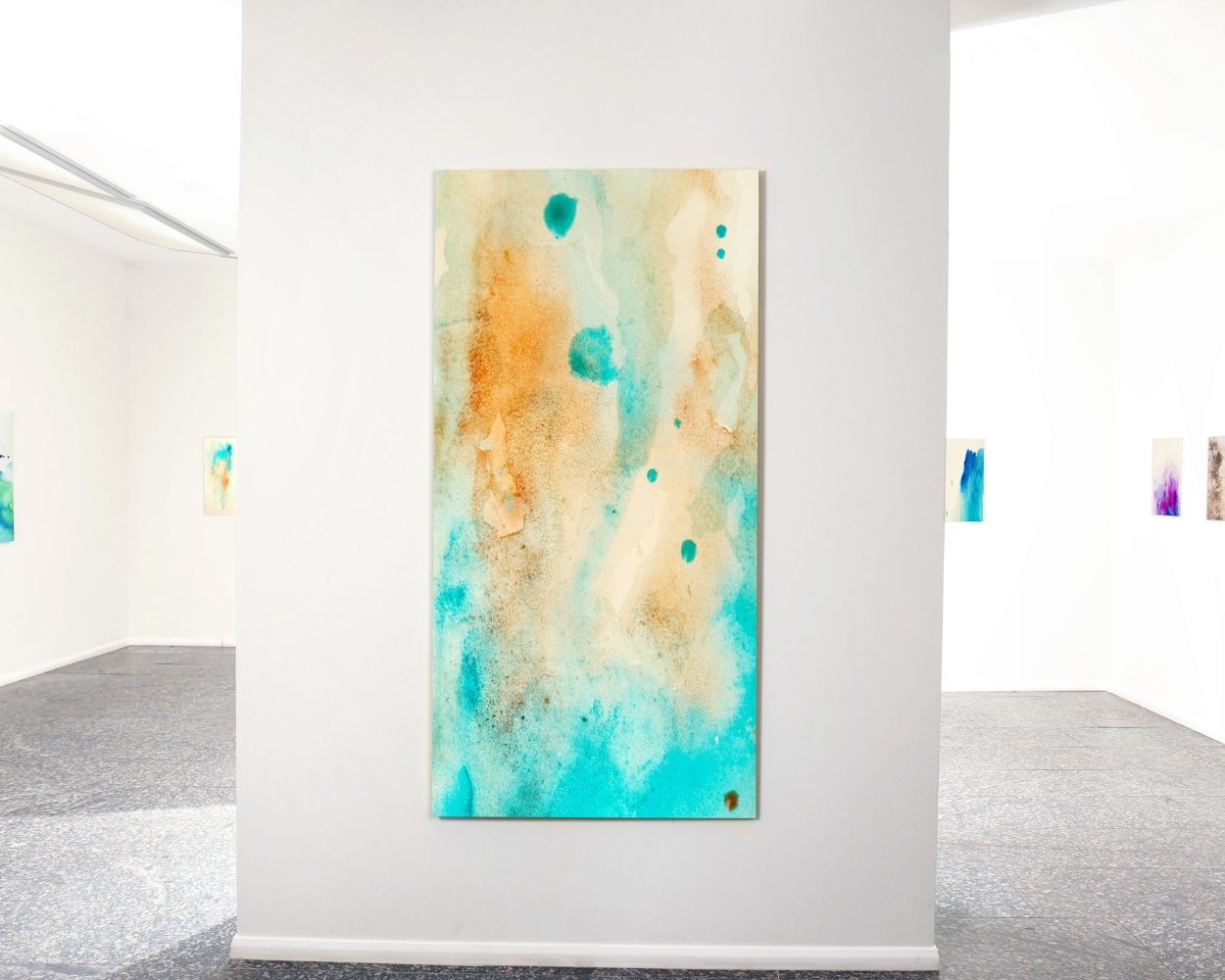
5 Ideas for Creating Large-Scale Artwork
Large-scale artwork gives painters an exciting opportunity to think beyond the limits of a traditional canvas. With more room to work, you can explore bold compositions, expressive brushwork, layered textures, and ideas that make a stronger visual impression.
But creating a large painting isn’t simply about using a bigger canvas. It takes planning, a clear concept, and an understanding of how viewers will experience the finished piece. Here are five ideas to help you approach your next large-scale artwork with confidence.
1. Paint a Panoramic Landscape
Give your favorite scenery room to breathe with a wide-format canvas. Think sweeping coastlines, mountain ranges, city skylines, or dramatic sunsets. Panoramic compositions allow you to explore distance, atmosphere, and movement across a broader surface.
Try using overlapping shapes, variations in color temperature, and changes in value to create depth. You don’t need to include every detail. Sometimes, a few expressive brushstrokes can capture the feeling of an entire landscape.
2. Make an Everyday Subject Larger Than Life
Take something familiar and turn it into the star of your painting. It could be a flower, a fruit, a human face, or an ordinary household object.
Enlarging everyday subjects can completely change how viewers perceive them. A simple flower, for example, can become an intricate study of color, texture, and form when painted across a large canvas.
Contemporary artists often use exaggerated scale to challenge expectations and encourage viewers to look at familiar things differently. It’s a great way to make an ordinary subject feel extraordinary.

3. Explore Expressive Abstract Painting
Large canvases are ideal for experimenting with bold gestures, oversized brushstrokes, layered colors, and unexpected textures.
Rather than planning every detail, begin with a mood, memory, or emotion. Use broad brushes, palette knives, or unconventional tools to create movement and energy. Don’t be afraid to leave some areas loose or unfinished-looking.
Jackson Pollock’s monumental painting Mural demonstrates how energetic marks and rhythm can transform a large surface. His approach is a reminder that scale can become part of the artistic expression itself.
4. Create a Multi-Panel Painting
Who says one canvas has to tell the whole story? Consider creating a diptych (two panels) or triptych (three panels).
You can develop one continuous image across several canvases or give each panel its own composition while maintaining a shared theme. Experiment with repeating shapes, colors, and visual patterns to connect the sections.
Filipino contemporary artist Rodel Tapaya offers an inspiring example through his large-scale, ten-meter triptych, which presents three interconnected narratives. This approach works particularly well for storytelling, abstract compositions, and decorative installations.

5. Turn a Wall or Space Into Your Canvas
Think beyond traditional framed artwork. Large-scale painting can become part of an interior, studio, exhibition, or public space.
You might create a mural-inspired composition, a series of oversized botanical paintings, or artwork designed specifically for a particular wall. Consider the room’s architecture, lighting, furniture, and viewing distance before choosing your dimensions.
The goal is to make the artwork feel connected to its surroundings rather than simply filling an empty space.
Give Your Big Ideas Room to Grow
Large-scale artwork encourages you to experiment, take creative risks, and rethink how people experience your paintings. Start with a clear concept, plan your composition, and choose a painting surface that supports your technique.
Most importantly, don’t let standard canvas dimensions limit your imagination. With custom-sized painting canvases and wood panels from CanvasLot, you can choose a surface that fits your creative vision.