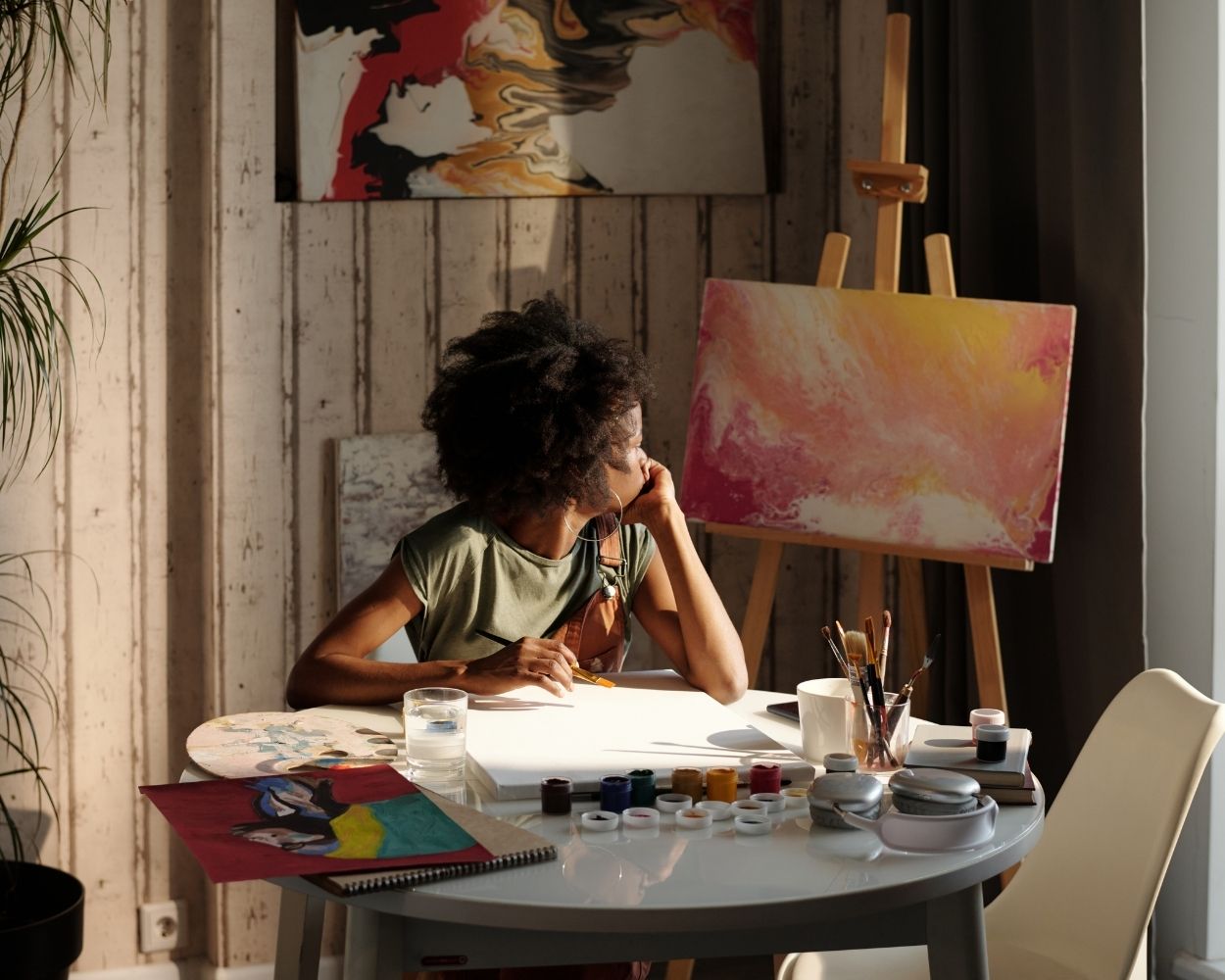
Creative Burnout: Why It Happens and What Artists Can Do About It
Creative burnout doesn’t usually arrive all at once. It creeps in quietly. One day the studio feels flat. The next, picking up a brush feels heavier than it should. Ideas dry up, motivation dips, and everything starts to feel repetitive or pointless.
Burnout affects amateur painters, professionals, and hobbyists alike. In fact, the more seriously you take your work, the more vulnerable you may be.
What Creative Burnout Really Is
Creative burnout isn’t laziness or lack of discipline. It’s a stress response. It happens when output, pressure, or expectation outpaces recovery and curiosity.
Recent discussions in creative and mental health research point to the same pattern seen in other professions: prolonged stress, lack of rest, and constant evaluation lead to emotional exhaustion and reduced creative capacity. Artists experience this not only from deadlines and income pressure, but also from self-imposed standards and constant comparison, especially in the age of social media.
Burnout often shows up as:
- Loss of excitement about work you once loved
- Avoidance of the studio
- Overthinking every mark
- Feeling numb, cynical, or disconnected from your own ideas
Common Causes for Painters
Burnout doesn’t come from one source. It’s usually a combination.
For some, it’s overproduction: pushing to make more work without enough reflection or rest. For others, it’s stagnation: repeating a style that sells or gets praise but no longer feels alive.
Teaching artists often burn out from giving creative energy all day and having little left for themselves. Amateur artists burn out chasing visibility, opportunities, or validation. Hobbyists burn out by turning something joyful into another form of self-judgment.
What Doesn’t Help
Forcing productivity rarely fixes burnout. Neither does waiting passively for inspiration to return.
Scrolling endlessly for “inspiration,” comparing yourself to artists at different stages, or buying new materials in hopes of a spark can actually deepen the problem. These actions distract without restoring energy.
Burnout isn’t solved by more input. It’s solved by better balance.
Practical Ways Artists Recover
Change the stakes.
Shift from making “good work” to making low-pressure work. Sketch badly. Paint small. Set a timer for 20 minutes and stop when it rings.
Change the mode.
If you usually paint alone, talk with other artists. If you’re always conceptual, work purely from observation. If you work large, go small. Novelty matters.
Rest without guilt.
Rest isn’t quitting, but maintenance. Many artists report breakthroughs only after stepping away long enough for their nervous system to settle.
Reconnect with process, not outcome.
Burnout often comes from focusing too much on results. Go back to what the paint feels like. The sound of charcoal. The physical act of making marks.
Creative burnout doesn’t mean your work is over. It means something needs to shift. Art is a long practice. Periods of intensity and withdrawal are part of the rhythm. The work will come back when you make space for it.