Category: Acrylic Painting

Acrylic Artists Who Made Their Mark in History
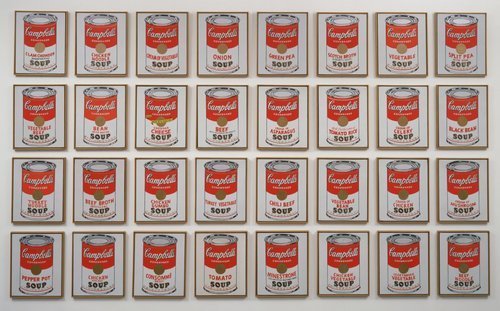
Campbells_Soup_Cans_Warhol
Campbell’s Soup Cans, 1962

Many artists use acrylics in painting due to its fast-drying qualities and versatility. Unlike oil paints which take decades to fully dry, an acrylic painting can dry in just hours. You can also use different painting styles when using acrylics and you can use it on canvas, paper, wood, glass, or even stone.

Here are the famous artists who used acrylics in their art works:

1. Andy Warhol (August 6, 1928 – February 22, 1987). Andy Warhol was a celebrated American artist and was considered as one of the leading figures in Pop Art. He was the one who started the use of everyday items such as soup cans, soft drink bottles, and dollar bills as subjects in his paintings which were then displayed in museums. Aside from using mundane objects, he was fascinated in the entertainment industry and used famous celebrities and even political figures as subjects. He created portraits of Marilyn Monroe, Elvis Presley, and Jackie Kennedy.

2. Kenneth Noland (April 10, 1924 – January 5, 2010). Kenneth Noland was an American abstract painter. He was known for his geometrical themes called Chevrons and Stripes and circular motifs which are called Target paintings. Noland was known as one of the leading figures in the Color Field painting style in the US. In the 1950s, he was able to meet influential people in the art scene such as abstract expressionists Helen Frankenthaler and Morris Louis. They greatly affected the artistic direction of his career. He started using Frankenthaler’s technique in stain painting wherein he used a thinned acrylic paint on unprimed canvas. These three painters led the formation of the Color Field painting style.

3. Robert Motherwell (January 24, 1915 – July 16, 1991). Robert Motherwell was an American abstract painter. In the 1960s, he used acrylics in painting large-scale canvases. Primarily using oils, he switched to acrylics because of its quick drying time. The Elegy of the Spanish Republic is considered as one of his most important works. It is a series of abstract paintings using black and white paint in bold movements and strokes.

4. David Hockney (born July 9, 1937). David Hockney is an English painter and draftsmen, and a founding member of the British Pop Art movement in the 1960s. He is one of the most famous British  artists. His visit in California inspired him to paint swimming pools and the urban landscape using acrylics. During that time, he developed his own style of painting called naturalistic-realistic painting. One of his famous works includes The California Collector (1964) which depicts a swimming pool in LA.

5. Roy Lichtenstein (October 27, 1923 – September 29, 1997). Roy Lichtenstein was an American pop artist who used comic strips and advertisements as inspirations in his art works. He was famous for creating bright and graphic images which parodied pop culture. In one of his most significant works, Drowning Girl, he used both oil and acrylic (Magna) paints and the piece was considered as a “masterpiece of melodrama.”

Image source: http://www.moma.org
Acrylic Painting Tips for Beginners

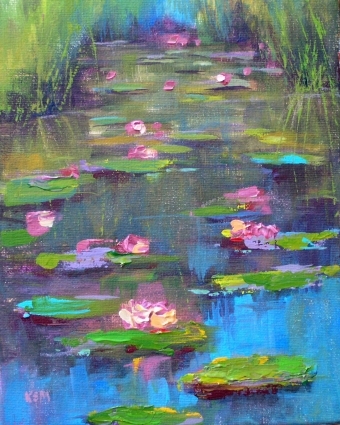
water_lily_acrylic_painting
Water Lily Acrylic Painting by Karen Margulis

Acrylic paint is a fairly new medium compared to oil paint, only having been around in  the 1950s. Since it’s a flexible medium, acrylic is continuously being experimented and explored in the art world. If you’re starting your hand at acrylic painting, here are some of the painting techniques that you can utilize:

Watercolor Effects
Watercolor effects is a technique where acrylic paint is diluted to reach the consistency of watercolor paint. Many artists use this technique, but unlike watercolor, acrylic washes can be layered on top of another without disturbing the colors underneath. To achieve this, you have to wait for the first pint to dry first before applying another paint color on top. Once dry, the acrylic paint becomes water-resistant.

One drawback of this technique is it’s difficult to modify the color once the paint is dry and sometimes, washes dry with unwanted hard edges. Two tricks to solve this problem: dampen the canvas or use another brush moistened with water. Apply the paint with one brush and soften its edges using the other moist brush.

Pouring and Dripping Technique
Master painter Jackson Pollock popularized this technique in the 1940s and 1950s. This technique doesn’t require the use of paintbrushes or palette knife. You use gravity to move a very fluid acrylic paint across the canvas. You can pour the paint directly on the canvas or you can dip a brush in the paint and let it drip down on the canvas. You can use this formula in creating a fluid paint for this technique: 50% acrylic paint, 20% clear water-soluble varnish, and 30% water.

Sgraffito Technique
Sgraffito comes from the Italian word graffiare which means to scratch. As the name suggests, this is a scratching technique. You scratch the top layer of the paint to reveal areas on the surface underneath. A thick layer of paint is applied onto the canvas and you can use a blunt tool like a screwdriver or an end of an old paintbrush to scratch into the top layer and reveal another color underneath or the white surface of the canvas.

Using a Squeegee
You can use any regular squeegee from any hardware store for this technique. To do this, put some paint blobs on your canvas, you can lay out several colors. Using the squeegee, swipe it across the surface, dragging the paint across the canvas, mixing and smearing all the paints as you go.

Acrylic painting is a good starting point for beginners. It offers versatility and flexibility to an artist.

Image source: www.dailypainters.com

Jackson Pollock: Master of the “Drip” Technique

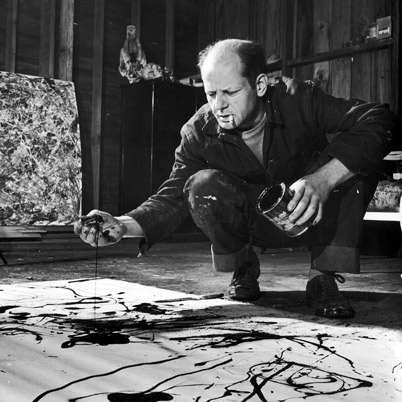
Jackson-Pollock
Jackson Pollock, famous 20th century artist

“It is only when I lose contact with the painting that the result is a mess. Otherwise there is pure harmony, an easy give and take, and the painting comes out well.”
– Jackson Pollock

Jackson Pollock is best known for revolutionizing the world of modern art with his unique abstract techniques, specifically the drip painting technique. Born in January 28, 1912, Paul Jackson Pollock, more popularly known as Jackson Pollock  was a major influence in the abstract expressionist movement. He studied under Thomas Hart Benton, an esteemed painter and muralist, before exploring abstraction expressionism. Pollock died in an alcohol-related car accident in December 1956. He was 44.

The “Drip” Period

In 1936, Pollock attended a workshop by Mexican muralist David Alfaro Siqueiros in New York City and this is where he was introduced to the use of liquid paint. He used paint pouring as a technique and he began painting with his canvas laid down on the floor and the “drip” technique was born.

The “drip” technique is a combination of Pollock’s body movements, flow of paint, gravity, and paint absorption. It was a technique which merges the controllable and uncontrollable factors in painting. Pollock moves around his canvas while dripping, pouring, splattering paint onto it until he’s satisfied with the result.

Pollock’s paintings became famous during the “drip” period, between 1947-1950. The Life magazine published an article on Pollock in 1949  which asked, “Is he the greatest living painter in the United States?” that made him distinguished in the art world. His exhibition in the sames year at the Betty Parsons Gallery sold out and he instantly became the best paid avant-garde painter in the US.

Here are some of Pollock’s most famous paintings during the “Drip” period:

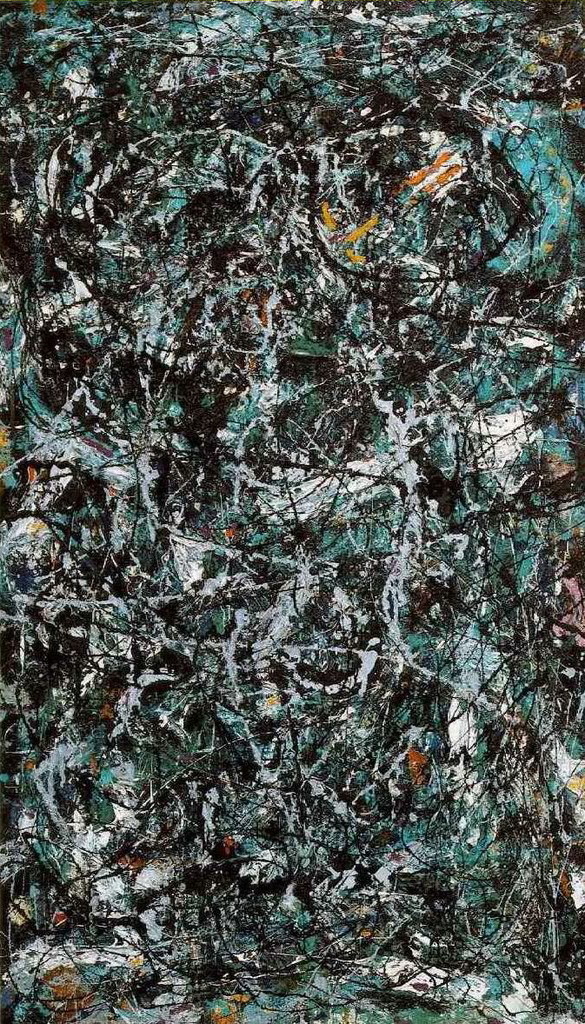
full-fathom-five
Full Fathom Five, 1947

Full Fathom Five is one of Pollock’s earliest drip paintings. The top layers consist of poured skeins of house paint, creating a lace-like image. Pollock used a brush and palette knife to build up the underlayer of the painting.

number-1
Number 1, 1948

Number 1 is the masterpiece of the drip technique. This is one among Pollock’s largest works, pulsing with energy, with an intricate web of hues that suggests speed and force.

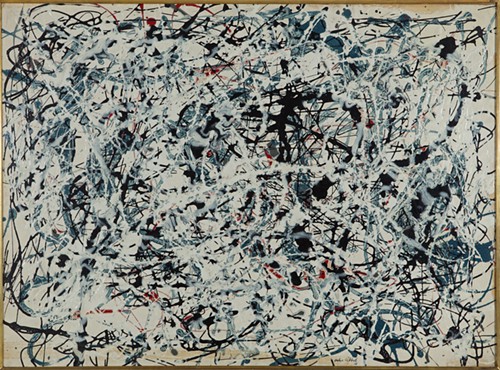
composition
Composition (White, Black, Blue and Red on White), 1948

Composition (White, Black, Blue and Red on White), 1948 is a great example of Pollock’s “drip” technique or flung paint. When Pollock was creating this masterpiece, he placed his canvas on the floor and painted in a rhythmic, undulating style. This piece represents pure abstraction, a painting with no focal point and thus making all areas of the painting important.

Image sources: www.biography.com and www.jackson-pollock.org.