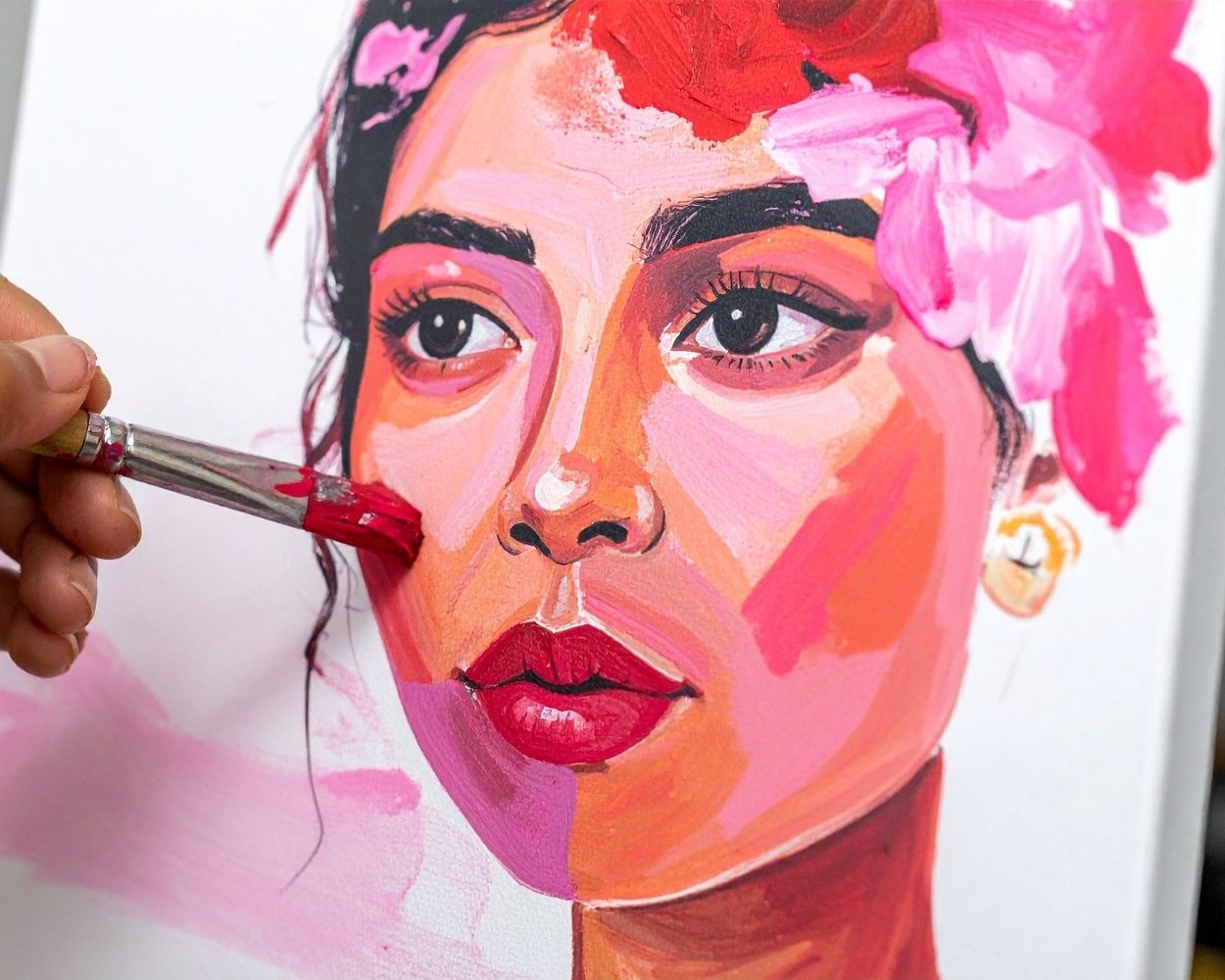
10 Dos and Don’ts in Portrait Painting Every Artist Should Know
Portrait painting can look intimidating. There are so many things to get right: proportions, expression, skin tones, lighting, hair, and all those small details that make a face recognizable. A convincing portrait usually comes from getting the big decisions right first.
Whether you work in oil, acrylic, or another medium, these 10 dos and don’ts can help you approach your next portrait with more confidence.
1. Do Start With the Big Shapes
Before worrying about eyes, lips, or individual strands of hair, look for the major shapes of the head and face. Block in the overall structure first.
Don’t start with details. If the basic shape is wrong, beautifully painted eyes will not rescue the portrait.
2. Do Check Your Proportions
Pay attention to the relationships between the forehead, eyes, nose, mouth, chin, and sides of the face. Compare one feature to another rather than relying entirely on memory.
Don’t assume every face follows the same formula. Real people have distinctive proportions, and those differences are part of what makes a portrait convincing.
3. Do Establish Your Values Early
Value means how light or dark something appears. A simple light, middle, and dark structure can give your portrait form before you introduce complicated color.
Don’t expect color to fix weak values. Value contrast is one of the strongest ways to guide the viewer’s eye through a painting.
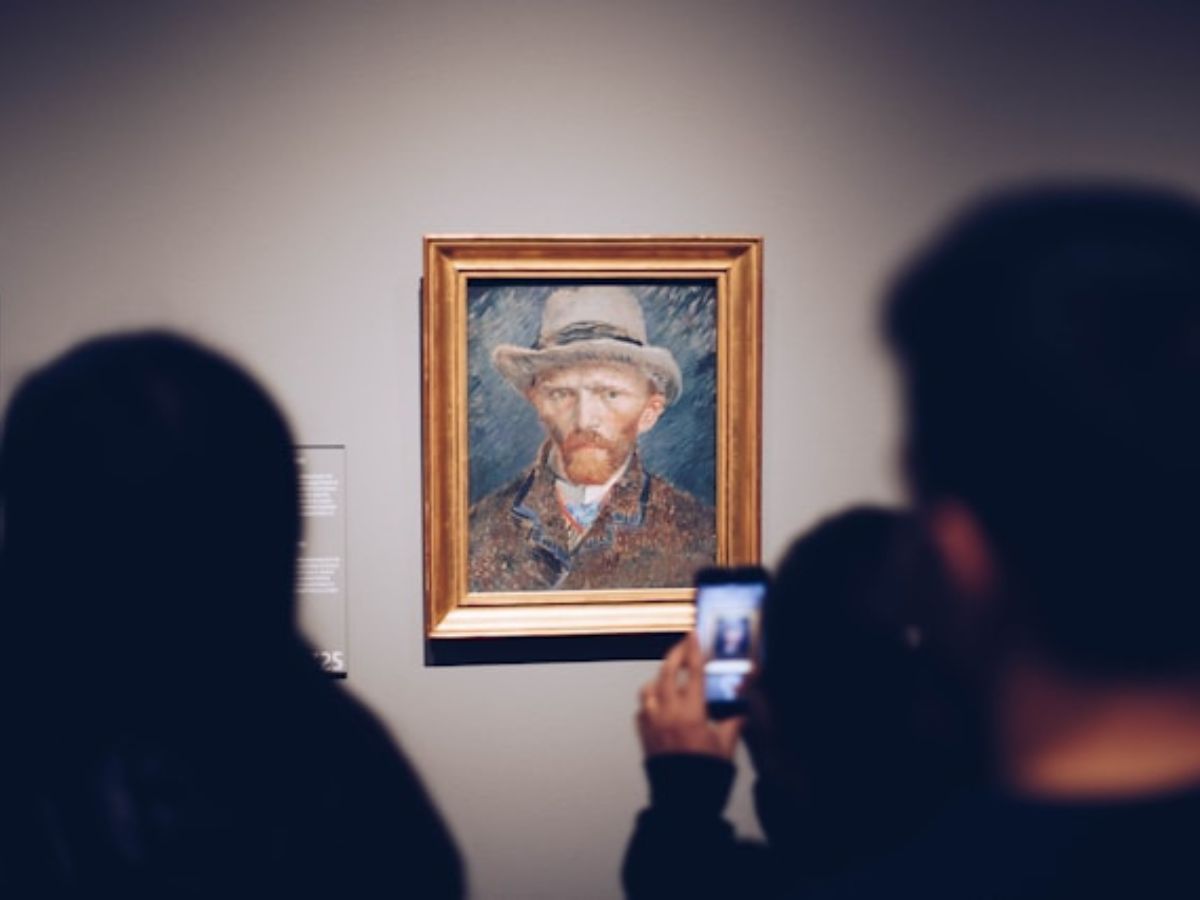
4. Do Squint at Your Reference
Squinting reduces distracting details and helps you see the major light and shadow patterns.
Don’t paint every shadow you see. Simplify where appropriate and concentrate on the shadows that describe the form.
5. Do Mix Skin Colors Carefully
Skin is rarely just “peach” or “brown.” Look for subtle shifts in temperature, value, and color across the face. Understanding hue, chroma, and value makes color mixing much easier.
Don’t use one skin-tone mixture everywhere. Variety makes the portrait feel more alive.
6. Do Vary Your Edges
Some edges should be sharp and noticeable, while others should gradually disappear into surrounding shapes. This variation creates depth and helps establish a focal point.
Don’t outline everything. A dark line around every feature can make a portrait look flat.
7. Do Paint the Features as Forms
Think of the nose, cheeks, lips, and eye sockets as three-dimensional forms rather than isolated symbols.
Don’t paint features like icons. The goal is to describe the structure underneath the surface.
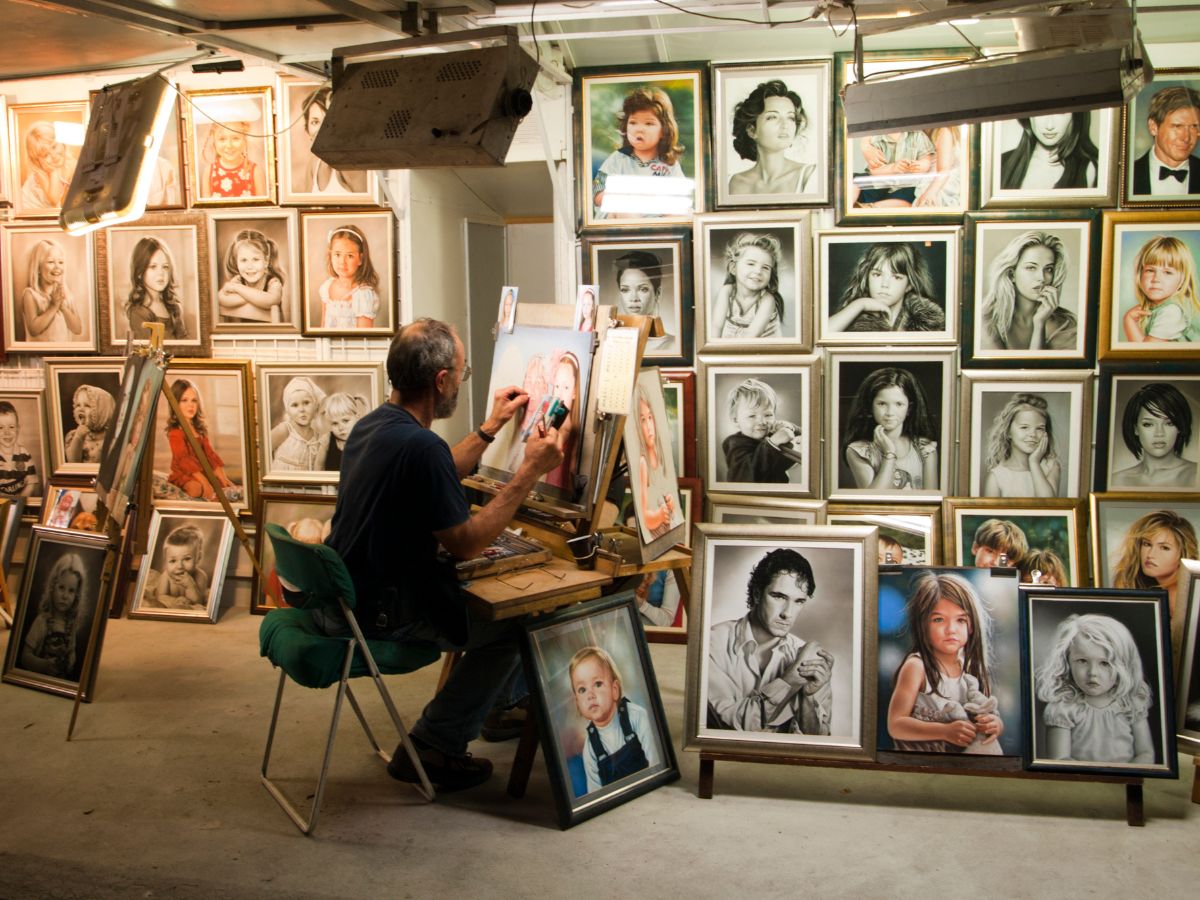
8. Do Let the Expression Guide You
A portrait is more than accurate anatomy. Small changes in the eyebrows, mouth, eyes, and head position can completely change the personality of the subject.
Don’t erase personality in pursuit of perfection. A technically accurate portrait can still feel lifeless if the expression is ignored.
9. Do Step Back Frequently
Walk away from your canvas every so often. Check the portrait from a distance and compare it with your reference.
Don’t spend an hour correcting one eye while ignoring the whole painting. A portrait needs to work as a complete image.
10. Do Know When to Stop
Once the important forms, values, colors, and focal areas are working, resist the urge to keep adding information. Good composition often depends on allowing secondary areas to remain quieter.
Don’t confuse more detail with a better painting.
The best portrait paintings balance observation with interpretation. Study your subject carefully, but give yourself permission to make artistic decisions. Accuracy matters, but so do mood, character, brushwork, and your own visual voice.